
Personal page • applied AI for social good

Building data + AI systems for social good.

I build monitoring‑grade pipelines that turn messy signals into traceable evidence, decision‑ready products, and ultimately, actionable insights. The work is systems‑first: research design, deep learning + information retrieval (RAG/KB patterns, AI‑assisted), algorithm design, geo + time analytics, and evaluation harnesses that stay attached in production.

Chief Data Scientist @ PDRI‑DevLab (U. of Penn)
Focus: research + algorithm design • multilingual NLP • deep learning + retrieval • geo/time signals
Open to collaboration • mission‑driven teams • reach out
Blueprint at a glance
A reusable workflow I apply across social‑impact domains.
monitoring‑grade
R&D:    RQ → op-sigs → baselines → fail modes
arch:   conn → parse → schema/patch → lineage
K/R:    embed → vec+KB → hybrid RAG
mdl:    multi-head → cal+unc → decision policy
LLM:    synth rules | assist labels | doc→schema | err triage
ship:   agg → dash/maps → alerts/briefs | API
SRE:    drift | health | audit | ver | rollback


Evidence‑linked Comparability Continuous eval Audit trails Human review

Design systems that can pivot across countries and crises—because today’s politics is volatile, and public-interest tools need to be portable and accountable.

I care about who gets protected by the system: contexts that are under-resourced, over-scrutinized, or politically targeted. That means stress-testing failure modes, tracking drift, and keeping outputs explainable—especially when power wants ambiguity.

About

When politics turns coercive, we don’t have to accept it.

What I build

End‑to‑end data + AI stacks for real‑world monitoring: ingestion, normalization, modeling, geo/time signals, and delivery — with provenance and evaluation wired in.

How I work

Calm surfaces over hard problems: schema stability, robust pipelines, algorithm design, and continuous error analysis so outputs stay usable under noise and drift.

Collaboration

If you’re building mission‑driven products (research labs, NGOs, policy, or industry), I’m happy to talk. Low‑friction contact here.

Deployments

A few deployed configurations that show how the same stack is parameterized across problem settings.

Deployed configurations

Civic space monitoring & forecasts Monitoring

Event detection + interpretable early‑warning signals for shifts in protest, restriction, media pressure, and advocacy activity — designed for frequent refreshes and evidence traceability.

Foreign influence & coercive leverage tracking Influence

Tracks influence patterns across channels (diplomatic / economic / information / cyber) with consistent task definitions, careful normalization, and transparent aggregation.

Climate‑driven disruption & response signals Climate

Detects environmental shocks and social responses using multilingual event modeling + geo grounding, with downstream time‑series signals for monitoring and analysis.

Subnational disruption monitoring (ADM1) Subnational

Map‑first monitoring at subnational resolution, wired to two‑stage geo reconciliation (country → ADM1), standardized counts, and surge detection for rapid scanning and drill‑down.

These are representative, not exhaustive — the emphasis is on reusable infrastructure that transfers to new domains and stakeholders.

Selected papers & technical notes

Previews only (first 2 pages) — to avoid circulating full drafts. Public versions are linked when available.

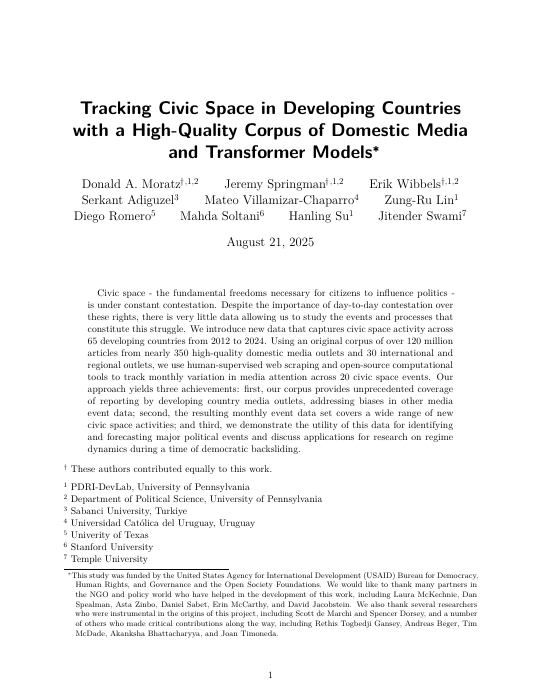
Preview of first page: Tracking Civic Space
Tracking Civic Space in Developing Countries with a High‑Quality Corpus of Domestic Media and Transformer Models
Preprint • 2025
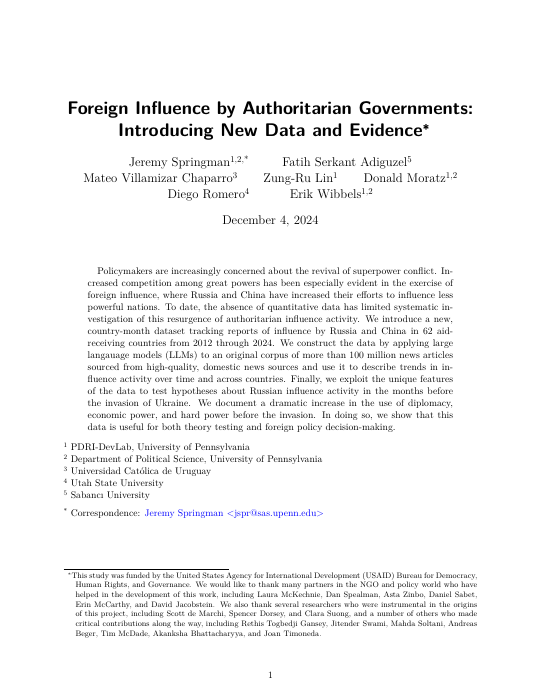
Preview of first page: Foreign Influence data
Foreign Influence by Authoritarian Governments: Introducing New Data and Evidence
Working paper • 2024
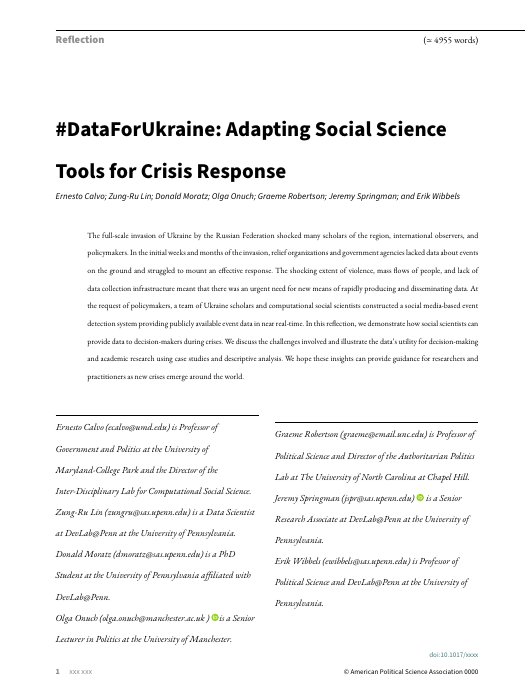
Preview of first page: DataForUkraine
#DataForUkraine: Adapting Social Science Tools for Crisis Response
Reflection • 2022
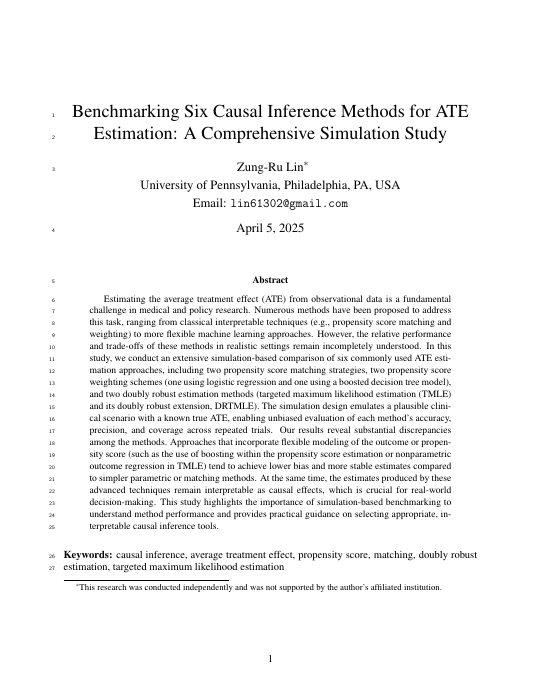
Preview of first page: Causal inference methods
Benchmarking Causal Inference Methods for ATE Estimation
Methods note • 2025
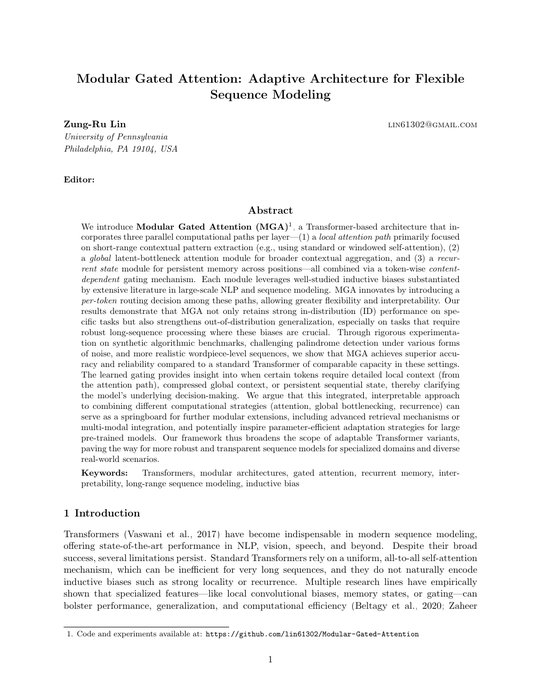
Preview of first page: Modular Gated Attention
Modular Gated Attention: Adaptive Architecture for Flexible Sequence Modeling
Preprint • 2025

If you’re exploring collaborations, I can share additional technical notes (evaluation harnesses, sampling QA playbooks, schema/patch patterns).

Impact themes

Typical problem spaces these systems support.

Civic space & democracy Information integrity Foreign influence Climate risk & adaptation Humanitarian response Auditability